

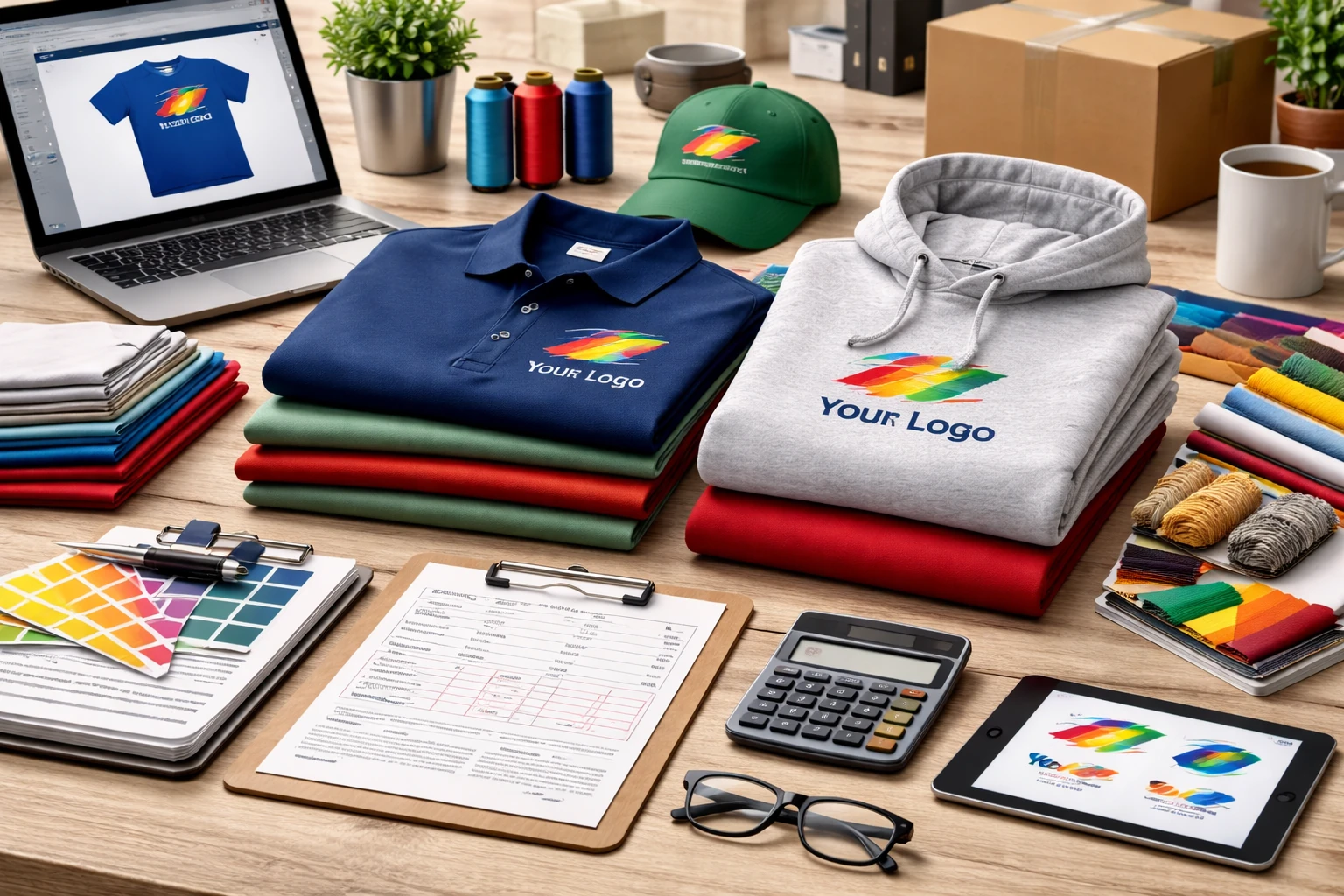
TLDR: For high-quality results and cost-efficiency, initiate the procurement process 12 weeks before your event to ensure inventory availability and avoid expensive rush fees.
Annual retreats are designed to build synergy and celebrate team culture, but poor logistics regarding company gear often undermine these goals. When organizers treat apparel as an afterthought, they face limited sizing, compromised print quality, and inflated shipping costs that drain the event budget. To solve these friction points, organizers must request a custom apparel quote early enough to account for fabric sourcing, production queues, and rigorous quality control checks.
Main Takeaways
- Standard production lead times range from 10 to 15 business days, excluding shipping and design approval.
- Inventory volatility requires a minimum 8-week buffer to secure specific garment colors and premium fabric blends.
- Rush fees for last-minute orders typically increase the total invoice by 25% to 50%.
- Early quotes allow for physical sampling, ensuring the final product matches the brand identity exactly.
The Production Timeline Requirements for Custom Gear
Experience in the apparel manufacturing industry shows that the 12-week mark is the gold standard for stress-free planning. This duration allows the manufacturing team to verify stock levels across national warehouses and secure the specific weights of cotton or polyester blends required. When a personalized apparel price estimate is requested three months in advance, it provides a safety net against supply chain disruptions that frequently affect high-demand sizes like Medium and Large.
Phase One: The Three-Month Conceptual Window
At the 90-day mark, the focus remains on garment selection and budget allocation. This is the period to decide between a heavy 6.0 oz cotton tee for a rugged outdoor retreat or a lightweight, moisture-wicking synthetic for a tropical location. Securing a custom merchandise inquiry at this stage allows the manufacturer to flag any potential stock issues with specialty colors or sustainable fabric lines that may have longer replenishment cycles.
Phase Two: The Eight-Week Design Finalization
By the 60-day mark, artwork should be finalized in vector format. This timeframe is essential if the design requires complex embroidery digitizing or color separation for multi-color screen printing. A screen printing quote online often assumes the art is production-ready; however, professional manufacturers use this period to run test prints and ensure the ink viscosity is correct for the chosen fabric density.
Phase Three: The Four-Week Production Buffer
The final month is where physical production occurs. This includes the setup of screens, the calibration of embroidery machines, and the actual garment decoration. Having the order finished two weeks before the retreat start date provides a crucial buffer for shipping transit times and allows for an internal audit of the shipment to ensure every size was delivered as requested.
Variables That Influence Your Project Timeline
Not all garments are created equal, and neither are the methods used to decorate them. A bulk custom clothing quote for simple one-color screen printing will move through a facility much faster than an order requiring high-density embroidery or mixed-media applications. Understanding these technical nuances prevents the frustration of missed deadlines.
Design Complexity and Artwork Preparation
If a logo needs to be converted from a low-resolution JPEG to a high-fidelity vector file, it adds days to the pre-production phase. For embroidery, the digitizing process—converting a visual image into a stitch map—requires a skilled technician to determine the correct stitch direction and density to prevent fabric puckering. High stitch-count logos on thin fabrics require specialized stabilization that adds time to the production run.
Garment Sourcing and Inventory Logistics
Stock levels fluctuate daily. While a standard black t-shirt is usually easy to find, requesting specific brands like Bella+Canvas or specialized organic cotton options requires the manufacturer to pull from multiple distribution centers. If the retreat requires 500+ pieces, the logistics of aggregating that inventory before the first drop of ink can take up to seven business days.
Financial Advantages of Early Quote Requests
Waiting until the last minute is the most expensive way to purchase clothing. Manufacturers prioritize efficiency, and a wholesale custom apparel quote rewards clients who fit into a standard production schedule. Early planning allows for strategic decision-making that stretches the retreat budget further.
Eliminating Expensive Rush and Freight Fees
Rush fees are a reality of the industry, designed to cover the overtime labor costs and machine rescheduling required to skip the queue. By starting early, these fees—which can exceed $500 on medium-sized orders—are completely avoided. Furthermore, standard ground shipping is significantly more affordable than overnight air freight, which often costs as much as the garments themselves when shipping heavy boxes of bulk apparel.
Maximizing Price Break Tiers
Custom manufacturing is a volume-based business. Requesting a custom t-shirt printing quote early gives organizers the time to finalize their headcount. Moving from 144 pieces to 288 pieces often triggers a significant price drop per unit. When rushed, organizers often guess their numbers and miss out on these cost-saving brackets, or worse, they order too few and pay a premium for a small secondary run.
Technical Comparisons of Decoration Methods
The choice of decoration method impacts both the timeline and the final feel of the garment. For a corporate retreat, the garment must be durable enough to survive multiple washes while remaining comfortable for all-day wear. Each method has a specific production rhythm that influences when the quote should be initiated.
Screen Printing vs Custom Embroidery
Screen printing is the standard for high-volume orders because of its speed once the presses are set up. However, the drying and curing process for plastisol or water-based inks must be monitored to ensure the print doesn’t crack. A custom embroidery price request is handled differently; the machines run slower, and the setup involves manual threading of different needle stations. For retreats where a premium, professional look is required on polos or jackets, embroidery is the better choice but requires a longer production window.
Quick Comparison of Decoration Standards
Use this table as a quick reference when deciding between materials and decoration methods based on durability and long-term performance for your team gear.
| Method | Durability | Texture/Feel | Ideal Use Case | Production Speed |
| Screen Printing | High (50+ washes) | Lightly raised ink | Bulk t-shirts for events | Very Fast |
| Embroidery | Highest (Permanent) | Textured, 3D effect | Corporate polos/outerwear | Moderate |
| Direct-to-Garment | Moderate | Soft, integrated feel | Small batches, many colors | Slow |
| Heat Transfer | Moderate | Smooth, vinyl-like | Individual names/numbers | Fast |
The Importance of the Physical Sample Buffer
One of the biggest mistakes in retreat planning is relying solely on digital mockups. A digital proof cannot convey the hand-feel of a tri-blend fabric or the exact sheen of an embroidery thread. Requesting a quote early enough allows for the production of a physical sample. This step ensures the color of the ink doesn’t bleed into the fabric (a common issue with polyester blends) and that the logo placement is anatomically correct for the intended wearers.
Managing Internal Approvals and Size Collection
The delay in ordering often stems from internal bureaucracy rather than the manufacturer. Gathering sizes from 100+ employees is notoriously difficult and usually takes two weeks longer than expected. By starting the quote process early, the logistics manager can set an internal deadline for size submission that aligns with the manufacturer’s “start date,” ensuring that the order enters the production queue without missing data.
Risks of Last Minute Apparel Procurement
When the timeline is compressed, quality is the first thing to suffer. Manufacturers may be forced to use “backup” garments that are lower quality or inconsistent in sizing if the preferred brand is out of stock. Furthermore, rushed production increases the likelihood of human error during the sorting and packing phase, leading to incorrect size distributions when the boxes are opened at the retreat location.
Recap of Retreat Apparel Planning
- Initiate the quoting process at least 12 weeks before the event date.
- Provide high-resolution vector artwork to avoid design delays.
- Consider embroidery for longevity and screen printing for high-volume cost savings.
- Factor in a 10-day buffer for shipping and internal inspection.
- Use physical samples to verify fabric quality and color accuracy.
FAQs About Retreat Apparel Logistics
How does order volume affect the timeline?
Larger orders typically require more time for inventory aggregation and longer machine run times. While a dozen shirts might take a day to print, an order of 1,000 shirts requires dedicated machine blocks and multiple quality control checks to ensure consistency across the entire batch.
What is the difference between production time and lead time?
Production time is the literal time it takes to print or embroider the garments. Lead time is the total duration from the moment the quote is approved to the moment the boxes arrive at your door, including sourcing, proofing, and shipping.
Why do specific colors go out of stock?
Apparel manufacturers produce “blanks” in seasonal cycles. If a specific heather grey or navy blue becomes popular, national inventory can be depleted quickly. Planning early allows the manufacturer to reserve stock or suggest comparable alternatives before the deadline becomes critical.
Can MFG Merch help me select the right fabric for my brand?
Yes, MFG Merch provides professional consultations to align fabric choices with a brand’s specific needs. By evaluating the retreat environment and budget, they offer expert guidance on GSM weights, fabric compositions, and the most compatible decoration methods for the project.
