

Cold-chain transit monitors and livestock telemetry tags share an unforgiving physical constraint: hermetic resin potting prevents battery replacement, requiring electronics to operate unattended for five to ten years on a single primary cell. When tracking containers across intermodal freight networks, continuous background conversion drains coin-cell chemistry prematurely.
Resolving this persistent energy drain requires offloading dynamic motion detection from firmware routines into specialized physical silicon. Specifying an STMicroelectronics ultra-low-power 3-axis accelerometer sensor provides autonomous inertial interrupt triggers, allowing the host microcontroller to remain in hard shutdown throughout transit.
Even optimized firmware algorithms cannot compensate for an idle processor burning microamperes during endless polling cycles. Preserving milliampere-hour reserves demands sensing hardware capable of evaluating physical displacement locally, waking external communications circuits only when true movement exceeds programmed impact thresholds.
However, innovative schematic design delivers zero real-world value if component shortages halt manufacturing lines. With semiconductor foundries adjusting capacity allocations across different packaging formats, hardware engineering teams must bridge sub-microamp circuit architecture with proactive, verified component sourcing strategies. Balancing responsive threshold interrupts with reliable bill-of-materials availability ensures edge designs reach commercial deployment without costly factory delays.
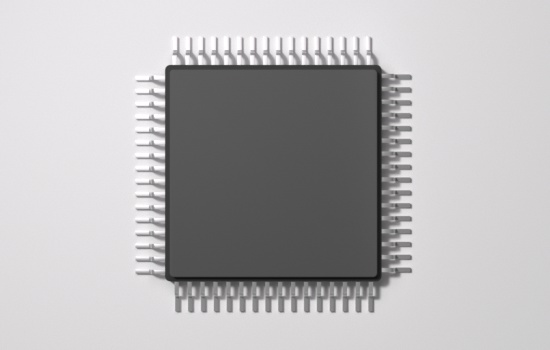
Silicon Architecture of the STMicroelectronics Ultra-Low-Power 3-Axis Accelerometer Sensor
The LIS2DH12TR integrates a specialized micromechanical capacitive sensing element with an advanced mixed-signal interface inside a miniature LGA-12 package measuring 2.0 by 2.0 by 1.0 mm. Manufactured by STMicroelectronics, this component converts multi-axis physical displacement into calibrated digital data across standard serial interfaces.
Operating across an input supply span from 1.71 V to 3.6 V, the sensor incorporates an independent 1.8 V input/output domain. This independent I/O supply allows the sensor’s digital interface to operate at a compatible voltage for low-voltage application processors, potentially avoiding external level-shifting components and reducing component count.
Operating current scales dynamically to match real-time system performance requirements. In ultra-low-power modes, current consumption drops to roughly 2 µA at a 1 Hz output data rate, and falls below 1 µA in power-down mode. User-configurable full-scale spans of ±2g, ±4g, ±8g, and ±16g accommodate delicate tilt sensing as well as severe mechanical shock logging
Output data rates adjust flexibly between 1 Hz and 5.3 kHz, allowing the sensing element to match sampling speed to instantaneous operating conditions. Integrated thermal compensation mitigates zero-g offset drift, ensuring consistent measurement accuracy across wide operating temperatures ranging from -40°C to +85°C.
Internal signal processing minimizes communication overhead through an integrated 32-level first-in, first-out (FIFO) memory buffer. Instead of interrupting the host processor for every conversion, acceleration data accumulates locally in the FIFO. A programmable watermark interrupt can notify the microcontroller when a configured number of samples is available for retrieval over the I2C or SPI interface.
Autonomous interrupt engines detect free-fall events, 4D/6D spatial orientation, and single- or double-tap inputs directly on-chip. Programmable inertial thresholds trigger wake-up interrupts without continuous host polling, helping conserve battery power while detecting configured motion events during transit.
Vetting an Accelerometer Sensor Supplier Under Factory Allocations
Scaling industrial IoT hardware from engineering prototypes into volume manufacturing exposes hardware schedules to severe supply chain volatility. Relying on an unvetted accelerometer sensor supplier during unexpected factory allocations leaves assembly facilities vulnerable to shipment de-commitments, sudden price surges, and halted manufacturing operations.
Surface-mount assembly lines cannot operate with partial component kits. A missing motion sensor, miniature decoupling capacitor, low-dropout linear regulator, or precision clock crystal idles automated surface-mount equipment, tying up valuable working capital and delaying scheduled customer deliveries. A single missing surface-mount component brings automated production lines to a standstill, inflating overhead costs.
To address these procurement bottlenecks, Unibetter distributes a wide range of electronic components across fleet telematics, cold-chain instrumentation, smart agriculture, and embedded computing sectors. This comprehensive distribution coverage allows purchasing teams to consolidate active microcontrollers, passive support networks, and motion sensors under synchronized procurement schedules.
Proactive supply chain engagement allows hardware designers to evaluate pin-compatible alternates and package revisions before market shortages disrupt assembly. By tracking manufacturer production cycles, procurement managers protect multi-year hardware programs from component obsolescence and unexpected silicon revision changes.
Franchised Traceability and Risk Mitigation in Component Procurement
Protracted component shortages often force purchasing agents to explore unregulated secondary markets and open broker platforms. Procuring microelectromechanical devices through unmonitored channels introduces serious vulnerabilities, including remarked scrap silicon, refurbished components, and parts damaged by improper electrostatic discharge or moisture exposure.
Installing compromised sensors into sealed edge enclosures creates disastrous field liabilities. Defective MEMS elements frequently display abnormal offset drift, excessive noise density, or erratic communication bus latch-ups that trigger total device failure after field potting, resulting in expensive warranty claims and brand degradation.
Facing tight market allocations and sudden broker markups, engineering teams need agile procurement partners. UniBetter resolves these bottlenecks by supporting customers to locate needed electronic components and acquire them at lower costs, keeping active build schedules within planned budgets.
Collaborating with a qualified accelerometer sensor supplier gives engineering departments verified factory traceability and transparent delivery schedules. Sourcing through validated channels eliminates secondary market premiums and secures uninterrupted access to authentic STMicroelectronics ultra-low-power 3-axis accelerometer sensor reels.
Through established international logistical networks and real-time inventory tracking, Unibetter assists manufacturing partners in securing critical motion sensors without assembly delays. This dependable supply infrastructure delivers the operational agility needed to navigate tight semiconductor market cycles.
Technical and Commercial Viability in Remote Telemetry Deployments
Deploying long-lasting remote telemetry hardware requires balancing sub-microampere circuit architecture with disciplined semiconductor procurement. The LIS2DH12TR demonstrates how dedicated silicon state machines and autonomous FIFO buffering eliminate wasteful host processing cycles, enabling multi-year operational lifecycles on compact coin cells.
However, technical efficiency on the circuit board must be matched by dependable supply chain execution. Securing authentic semiconductors through authorized franchised distribution channels protects production schedules, prevents counterfeit infiltration, and ensures that edge hardware delivers uncompromised measurement precision throughout demanding multi-year industrial deployments.
