

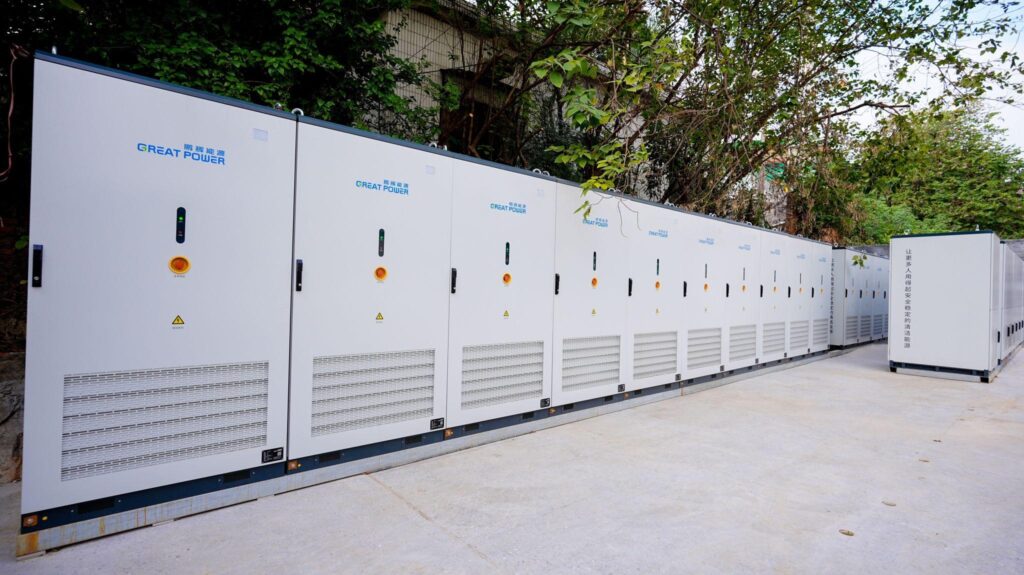
As renewable energy deployment accelerates, developers are looking for storage solutions that can be deployed efficiently, scaled according to project requirements, and integrated into increasingly complex energy infrastructure. Containerized Energy Storage Systems have emerged as a practical solution for many utility and commercial projects. By integrating batteries, thermal management, electrical protection, and control equipment into standardized enclosures, these systems can simplify project planning while supporting reliable energy storage.
Simplified Project Integration
One of the strongest advantages of containerized storage is system integration. Instead of installing numerous independent components across a project site, developers can use an integrated enclosure designed to accommodate key energy storage equipment.
This architecture can simplify transportation, installation, electrical connection, and commissioning. It can also make site planning more straightforward because the major storage equipment is arranged within a standardized structure.
For large renewable energy projects, simplified integration can help reduce construction complexity. Developers can coordinate storage deployment with solar or wind generation infrastructure while maintaining a clearer project layout.
Better Use of Available Space
Land availability is an important consideration for many energy storage projects. Developers may need to install storage alongside photovoltaic arrays, substations, industrial facilities, or other infrastructure while complying with site limitations.
Containerized systems provide a compact architecture that can accommodate substantial energy capacity within a defined footprint. Their standardized dimensions also make it easier to plan equipment spacing, access routes, maintenance areas, and electrical connections during the early design stage.
This can be particularly valuable for projects where land costs are high or where storage must be integrated into an existing facility. Developers can compare usable capacity against the required site footprint when determining the most suitable configuration.
Flexible Deployment for Different Applications
Energy storage is no longer limited to a single use case. Developers may deploy storage for renewable-energy shifting, peak demand management, grid services, backup power, or other applications. A flexible architecture can therefore be valuable when project requirements vary between sites.
Containerized systems are suitable for a broad range of project scales because multiple units can potentially be configured according to required power and energy capacity. This allows developers to consider storage as part of a larger energy infrastructure strategy rather than as an isolated piece of equipment.
The appropriate configuration should always be determined through load analysis, grid requirements, renewable generation patterns, operating conditions, and expected project economics.
Integrated Thermal Management Supports Reliability
Battery performance is influenced by operating temperature. Large-scale storage installations therefore require effective thermal management to help maintain suitable operating conditions and support consistent performance.
Containerized systems can incorporate thermal management directly into the enclosure. Depending on the system architecture and battery technology, this may include air cooling or liquid cooling solutions designed to manage heat generated during charging and discharging.
For developers, thermal management should be assessed together with local climate, installation environment, expected operating cycles, and maintenance requirements. A system designed for one climate or duty cycle may not deliver the same performance under significantly different conditions.
Why Battery Storage Manufacturers Matter
Choosing the right supplier can have a significant effect on project performance. Experienced battery storage manufacturers can contribute knowledge across battery technology, system integration, manufacturing, quality control, and application engineering.
Developers should evaluate whether a supplier can support different storage scenarios and provide consistent manufacturing quality at the required project scale. Technical support, production capacity, supply-chain stability, system monitoring, warranty arrangements, and after-sales services should also form part of supplier due diligence.
A supplier with experience across multiple energy storage markets may provide additional value because it can understand how different applications place different demands on storage technologies.
Supporting Multiple Energy Storage Markets
The broader energy storage industry is developing across utility, commercial, residential, and distributed applications. This diversification gives manufacturers experience with different operating requirements, project sizes, and customer expectations.
Great Power has developed a diverse energy storage application portfolio. Its solutions cover utility-scale energy storage, C&I energy storage, residential energy storage, portable energy storage, telecom base station storage, and smart solar-storage-charging solutions.
This broad application coverage reflects the increasingly diverse role of energy storage across modern energy infrastructure. For developers, working with an energy storage company that understands multiple application environments can provide useful technical insight when evaluating different project requirements.
Supporting Renewable Energy Integration
Renewable generation is inherently variable, creating a need for flexible resources that can balance electricity supply and demand. Containerized storage can store electricity when renewable generation exceeds immediate demand and release it when additional power is required.
This makes storage particularly relevant to solar and wind projects. Developers can evaluate storage as part of a combined generation-and-storage strategy, considering factors such as renewable output, grid connection limits, electricity prices, and dispatch requirements.
The ability to coordinate generation and storage can improve the operational flexibility of renewable projects while supporting more efficient use of available electricity.
A Practical Choice for Future Energy Projects
The continued development of renewable energy, distributed generation, and flexible electricity infrastructure is likely to increase demand for scalable storage. Containerized Energy Storage Systems offer developers an architecture that combines integration, space efficiency, flexible deployment, and coordinated system management.
When comparing battery storage manufacturers, developers should look beyond headline capacity. Manufacturing experience, application coverage, system safety, thermal management, technical support, and long-term service capabilities all contribute to the overall value of a storage project.
As an energy storage company with applications spanning utility-scale, C&I, residential, portable, telecom, and smart solar-storage-charging scenarios, Great Power demonstrates how diversified storage expertise can support the evolving needs of the energy market. For developers, selecting a storage partner with broad application knowledge can help create projects that are technically robust, commercially practical, and prepared for the changing energy landscape.
